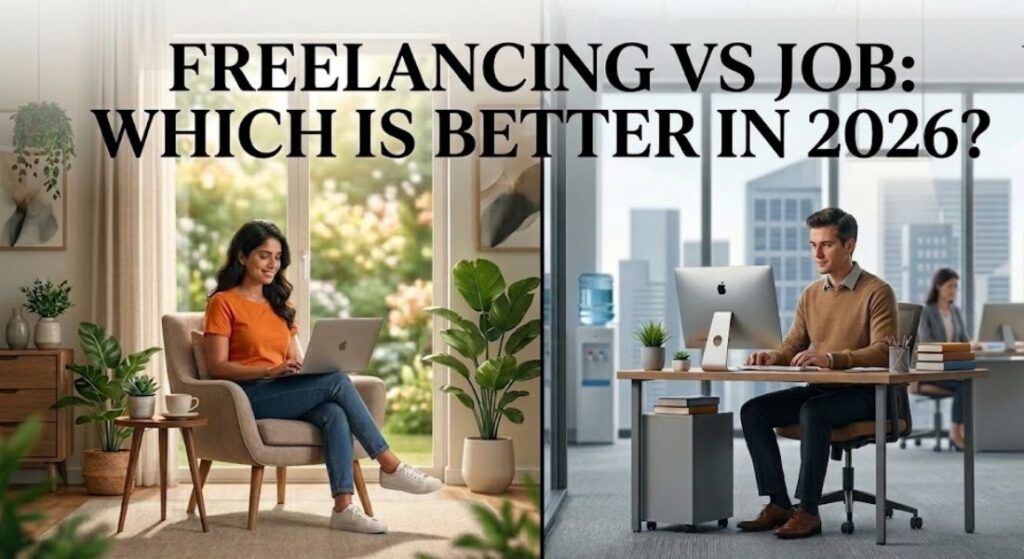
In 2026, many people are confused about whether they should choose freelancing or a traditional job. The internet has created thousands of online earning opportunities, and freelancing has become one of the fastest-growing career options worldwide. At the same time, traditional jobs still offer stability, fixed salaries, and long-term career growth.
Both freelancing and jobs have their own advantages and disadvantages. Some people prefer the flexibility and independence of freelancing, while others feel more comfortable with the security of a regular job. The right choice depends on your goals, personality, skills, and lifestyle.
What is Freelancing?
Freelancing means working independently and offering services to clients instead of working for one company permanently. Freelancers can work with multiple clients and choose their own projects.
Common Freelancing Services
- SEO
- Content writing
- Graphic design
- Video editing
- Web development
- Social media management
Freelancers usually work online through platforms like Upwork, Fiverr, Freelancer, and LinkedIn.
What is a Traditional Job?
A traditional job means working for a company or organization as an employee. Employees receive a fixed monthly salary and follow company rules and schedules.
Common Job Benefits
- Fixed salary
- Health benefits
- Paid leaves
- Job security
- Career promotions
Traditional jobs are still popular because they provide stability and structured career growth.
Freelancing vs Job: Major Differences
Freelancing Income
Freelancing offers unlimited earning potential. Your income depends on:
- Skills
- Experience
- Clients
- Work quality
Some freelancers earn more than full-time employees because they can work with multiple clients worldwide.
However, freelancing income is not fixed. Some months may bring high earnings, while others may be slower.
Job Income
Jobs provide a fixed monthly salary. Employees know exactly how much they will earn every month.
This stability helps with:
- Financial planning
- Monthly expenses
- Savings
But salary growth in jobs is usually slower compared to freelancing.
Flexibility and Freedom
Freelancing Flexibility
One of the biggest advantages of freelancing is freedom.
Freelancers can:
- Choose their working hours
- Work from home
- Select clients
- Decide project types
This flexibility is ideal for students, parents, and people who prefer independent work.
Job Flexibility
Traditional jobs usually have:
- Fixed schedules
- Office attendance
- Company policies
Although some companies now offer remote work, jobs generally provide less flexibility compared to freelancing.
Work-Life Balance
Freelancing Work-Life Balance
Freelancing allows people to create their own schedules, which can improve work-life balance.
However, beginners often work extra hours to:
- Find clients
- Complete projects
- Build income
Without proper time management, freelancing can become stressful.
Job Work-Life Balance
Jobs usually have fixed working hours, making it easier to separate work from personal life.
Employees often receive:
- Weekends off
- Paid vacations
- Holidays
This structure helps maintain routine and stability.
Job Security
Freelancing Security
Freelancing does not offer guaranteed income. Clients can stop giving work anytime.
Freelancers must:
- Continuously find clients
- Improve skills
- Stay active in the market
This makes freelancing less secure, especially for beginners.
Job Security
Traditional jobs usually provide more security because employees receive regular salaries and long-term contracts.
However, jobs are not completely secure either because companies can:
- Lay off employees
- Reduce staff
- Close businesses
Career Growth Opportunities
Freelancing Growth
Freelancers can grow quickly by:
- Increasing rates
- Building agencies
- Working with international clients
There is no salary limit in freelancing.
Successful freelancers often create:
- Personal brands
- Agencies
- Online businesses
Job Growth
Jobs provide structured promotions and career development.
Employees can:
- Get promotions
- Receive bonuses
- Move into management positions
Career growth in jobs is more stable but usually slower.
Skills Development
Freelancing Skills
Freelancers learn many practical skills because they handle:
- Communication
- Marketing
- Time management
- Client relationships
Freelancers often become more independent and adaptable.
Job Skills
Jobs help employees specialize in specific areas and gain industry experience.
Companies may also provide:
- Training programs
- Workshops
- Mentorship
Stress and Pressure
Freelancing Stress
Freelancers face pressure related to:
- Finding clients
- Unstable income
- Competition
- Deadlines
Managing everything alone can sometimes become stressful.
Job Stress
Employees may experience:
- Office pressure
- Boss expectations
- Workplace politics
- Fixed schedules
Stress levels depend on the work environment and company culture.
Which is Better for Beginners?
Freelancing for Beginners
Freelancing is great for:
- Students
- Side income seekers
- Creative people
- Remote workers
However, it requires patience and consistency.
Jobs for Beginners
Jobs are better for people who:
- Prefer stability
- Want fixed salaries
- Like structured environments
A job can also help beginners gain professional experience before starting freelancing.
Can You Do Both Together?
Yes, many people do freelancing and jobs together.
For example:
- Working a daytime job
- Freelancing part-time at night
This approach helps:
- Build extra income
- Reduce financial risk
- Gain freelancing experience gradually
Many successful freelancers started freelancing as a side hustle.
Best Freelancing Skills in 2026
If you want to start freelancing, some highly demanded skills include:
- SEO
- Content writing
- Graphic design
- Video editing
- Web development
- AI content editing
- Social media marketing
Learning a high-demand skill increases earning opportunities.
Future of Freelancing and Jobs
Future of Freelancing
Freelancing is growing rapidly because businesses prefer remote workers and flexible hiring.
AI tools and online businesses are creating even more freelancing opportunities in 2026.
Future of Jobs
Traditional jobs are also evolving with:
- Remote work options
- Digital workplaces
- Hybrid work systems
Both freelancing and jobs will continue to exist in the future.
Advantages of Freelancing
- Flexible working hours
- Work from anywhere
- Unlimited earning potential
- Freedom to choose clients
- Opportunity to build personal brand
Advantages of Jobs
- Stable monthly income
- Health and employee benefits
- Structured career path
- Professional office environment
- Paid leaves and vacations
Disadvantages of Freelancing
- No fixed income
- Difficult for beginners
- High competition
- No employee benefits
Disadvantages of Jobs
- Fixed schedules
- Limited freedom
- Salary limitations
- Less flexibility
Which Career Option Should You Choose?
The answer depends on your personality and goals.
Choose freelancing if you:
- Want freedom and flexibility
- Enjoy independent work
- Want unlimited income opportunities
Choose a job if you:
- Prefer stability
- Want fixed monthly income
- Like structured work environments
Some people even combine both for better financial security.
Conclusion
The debate between freelancing vs jobs depends entirely on personal preferences, goals, and lifestyle. Freelancing offers flexibility, independence, and unlimited earning potential, while jobs provide stability, structure, and financial security.
In 2026, both career paths offer excellent opportunities. The best choice is the one that matches your skills, mindset, and long-term goals. Whether you choose freelancing, a traditional job, or both together, continuous learning and skill improvement are the keys to success.
FAQs
1. Is freelancing better than a job?
Freelancing offers flexibility and higher earning potential, while jobs provide stability and fixed income.
2. Which is safer: freelancing or a job?
Traditional jobs are usually more stable, but freelancing can become secure with consistent clients.
3. Can beginners start freelancing?
Yes, beginners can start freelancing by learning a skill and building a portfolio.
4. Do freelancers earn more than employees?
Some experienced freelancers earn much more than traditional employees.
5. Is freelancing stressful?
Freelancing can be stressful because income is not always fixed and competition is high.
6. Can I do freelancing with a full-time job?
Yes, many people freelance part-time while working a full-time job.
7. Which freelancing skills are most profitable in 2026?
SEO, web development, AI-related services, and video editing are highly profitable.
8. Are jobs still good in 2026?
Yes, jobs still provide stability, benefits, and career growth opportunities.
9. What are the disadvantages of freelancing?
Freelancing lacks fixed income, employee benefits, and long-term security.
10. What is the biggest advantage of freelancing?
The biggest advantage is flexibility and the freedom to work from anywhere.